
Blog
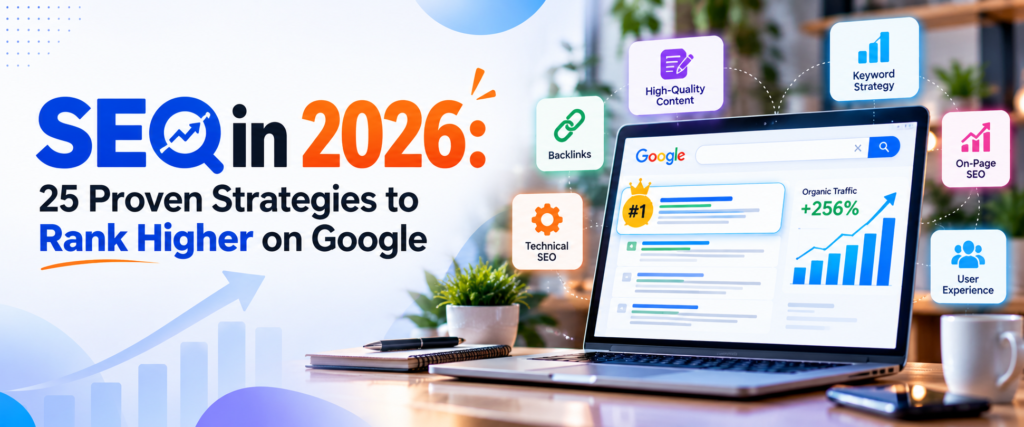
Search Engine Optimization (SEO) has evolved dramatically over the past few years. Gone are the days when stuffing keywords into a webpage was enough to rank on Google. In 2026, Google’s algorithms prioritize high-quality content, user experience, website performance, and search intent more than ever before.
Whether you’re a small business owner, blogger, eCommerce store, or digital marketing agency, SEO remains one of the most effective ways to generate consistent, high-quality organic traffic. Unlike paid advertising, SEO continues to bring visitors long after your content is published, making it one of the best long-term investments for online growth.
If you’re looking to improve your website rankings and stay ahead of the competition, these 25 proven SEO strategies will help you build a strong foundation for success.
Every day, billions of searches are made on Google by users looking for products, services, and information. Appearing on the first page of search results increases your chances of attracting visitors who are already interested in what you offer.
Some of the biggest benefits of SEO include:
Businesses that consistently invest in SEO are more likely to outperform competitors who rely solely on paid advertising.
Before creating content, understand what users are actually searching for. Every keyword has an intent—informational, navigational, commercial, or transactional. Your content should directly satisfy that intent.
Use keyword research tools to identify terms with good search volume and realistic competition. Focus on long-tail keywords that match your audience’s needs and are easier to rank for.
Google rewards content that genuinely helps users. Instead of writing search engines, write for people by answering questions clearly, providing practical solutions, and offering original insights.
Your page title is one of the strongest on-page SEO signals. Include your primary keyword naturally while keeping the title compelling enough to encourage clicks.
Although meta descriptions are not a direct ranking factor, they influence click-through rates. Write concise, benefit-driven descriptions that encourage users to visit your page.
Organize your content with H1, H2, H3, and H4 headings. A clear structure improves readability for both users and search engines.
Page speed directly affects user experience and search rankings. Compress images, minimize unnecessary code, use browser caching, and choose reliable hosting to keep your site fast.
Most searches now happen on mobile devices. Ensure your website is responsive, easy to navigate, and optimized for smaller screens.
Large image files can slow down your website. Compress images, use descriptive filenames, and include relevant alt text to improve accessibility and image search visibility.
Internal linking helps search engines understand your website’s structure while guiding visitors to related content. It also distributes page authority across your site.
Backlinks from reputable websites remain one of Google’s strongest ranking signals. Focus on creating valuable content that naturally attracts links rather than buying low-quality backlinks.
Refreshing, outdated blog posts with new statistics, examples, and insights can improve rankings and maintain relevance over time.
If you serve customers in a specific location, optimize your Google Business Profile, collect customer reviews, and use local keywords to improve visibility in local search results.
Google favors websites that are easy to use. Clear navigation, readable typography, logical layouts, and intuitive design help keep visitors engaged.
Encourage visitors to stay longer by providing engaging content, relevant internal links, videos, and clear calls to action.
Consistency builds authority. Develop a content calendar and publish valuable blogs, guides, case studies, or industry updates regularly.
Answer common questions directly and use lists, tables, and concise paragraphs to increase your chances of appearing in Google’s featured snippets.
Structured data helps search engines understand your content better and can enhance search results with rich snippets, such as FAQs, reviews, and product information.
Google values content that demonstrates Experience, Expertise, Authoritativeness, and Trustworthiness. Showcase author credentials, cite reliable sources, and provide accurate information.
Videos improve user engagement and can increase the time visitors spend on your website. Embedding relevant videos also adds value to your content.
As voice assistants become more popular, optimize for conversational queries and natural language phrases that users are likely to speak.
A secure website protects user data and builds trust. HTTPS is also a confirmed ranking signal for Google.
Track important metrics such as organic traffic, keyword rankings, click-through rates, and conversions using analytics tools. Regular monitoring helps identify areas for improvement.
Instead of publishing unrelated articles, create comprehensive pillar pages supported by related content. This strengthens topical authority and improves internal linking.
Google frequently updates its search algorithms. Following trusted SEO resources and adapting your strategy ensures your website remains competitive.
Even well-designed websites can struggle if basic SEO principles are overlooked. Avoid these common mistakes:
The future of SEO continues to evolve. Businesses should prepare for trends such as:
Adapting to these trends will help maintain strong search visibility in the years ahead.
SEO is a long-term strategy. Most websites begin seeing noticeable improvements within three to six months, though competitive industries may require more time.
SEO and paid advertising serve different purposes. SEO builds long-term organic traffic, while paid ads provide immediate visibility. A balanced marketing strategy often includes both.
Regular updates are essential. Publishing fresh content and reviewing older pages every few months helps maintain relevance and improve rankings.
Yes. Faster websites provide a better user experience and are more likely to rank well in Google search results.
Absolutely. By targeting niche keywords, focusing on local SEO, and creating valuable content, small businesses can compete effectively in search results.
SEO in 2026 is no longer about shortcuts or outdated tactics. Success comes from understanding your audience, creating genuinely helpful content, maintaining a technically sound website, and continuously improving the user experience.
By implementing these 25 proven strategies, businesses can strengthen their online presence, increase organic traffic, and achieve sustainable growth. Remember that SEO is an ongoing process—consistent effort and regular optimization will always outperform quick fixes.
Grow Your Rankings with Hope Digital Media
At Hope Digital Media, we specialize in delivering result-driven SEO solutions tailored to your business goals. From in-depth keyword research and technical SEO to content optimization, local SEO, and performance tracking, our team helps businesses improve Google rankings and generate qualified organic traffic.
Ready to grow your online presence? Contact Hope Digital Media today and let us help your business rank higher, attract more customers, and achieve long-term digital success.
Our Solution
Quick Links
Contact Us
Copyright
WhatsApp us